Research
My work bridges rigorous control theory with modern deep learning to build autonomous multi-robot systems that are safe, scalable, and deployable.
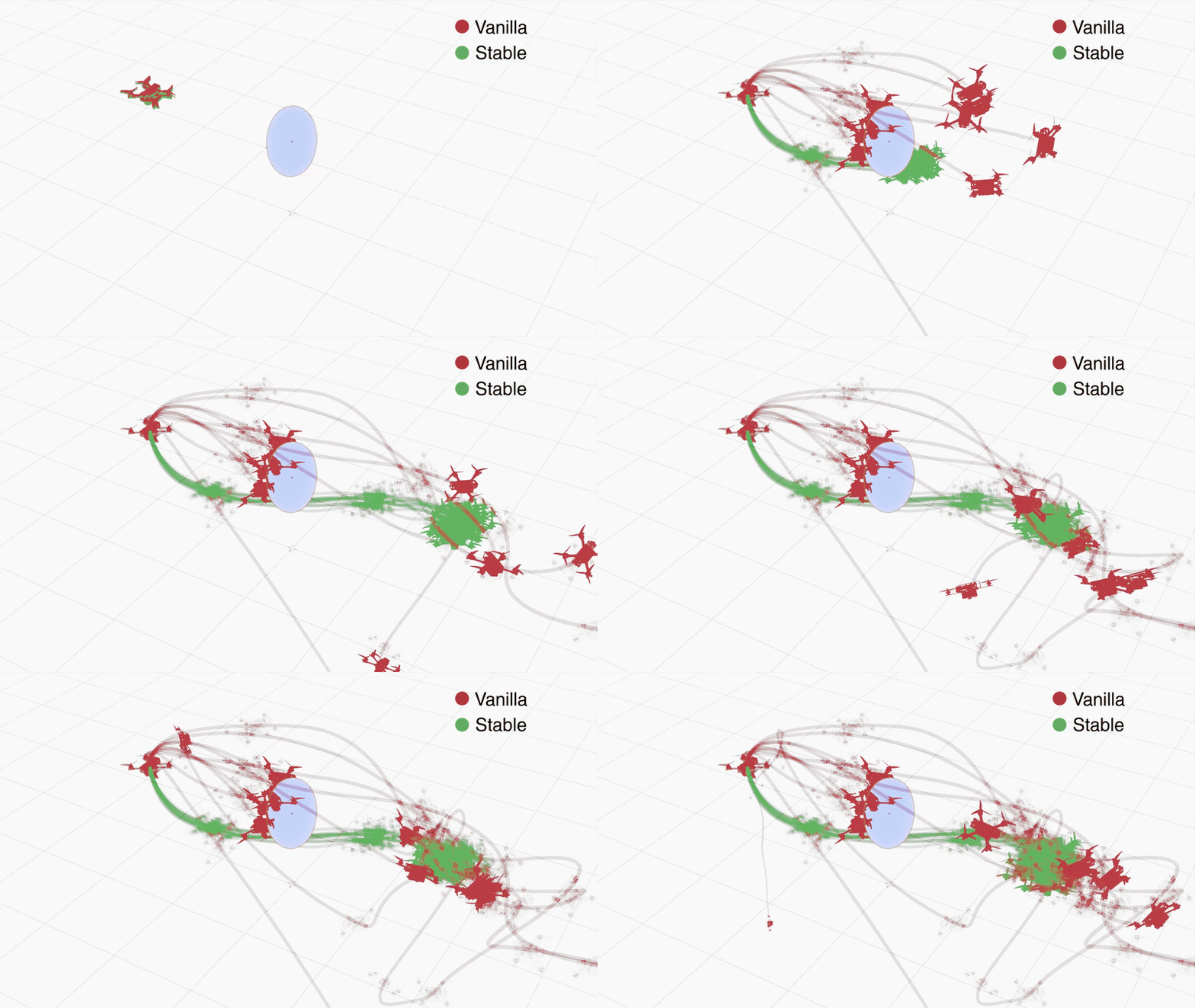
Learning-Based Stable Control
Challenge
Standard neural models function as black boxes lacking the theoretical guarantees necessary for safe deployment on physical robotic systems.
Approach
- Input-to-State Stability (ISS): Applied to the recurrent structure of Gated GNNs, ensuring bounded and stable behaviour despite real-world disturbances.
- Liquid-Graph Time-Constant (LGTC) Networks: A continuous-time Neural ODE formulation leveraging contraction analysis for structural stability.
- Dynamic Average Estimation: A distributed autoregressor with regularized stability constraints and encoding-decoding to reduce communication overhead.
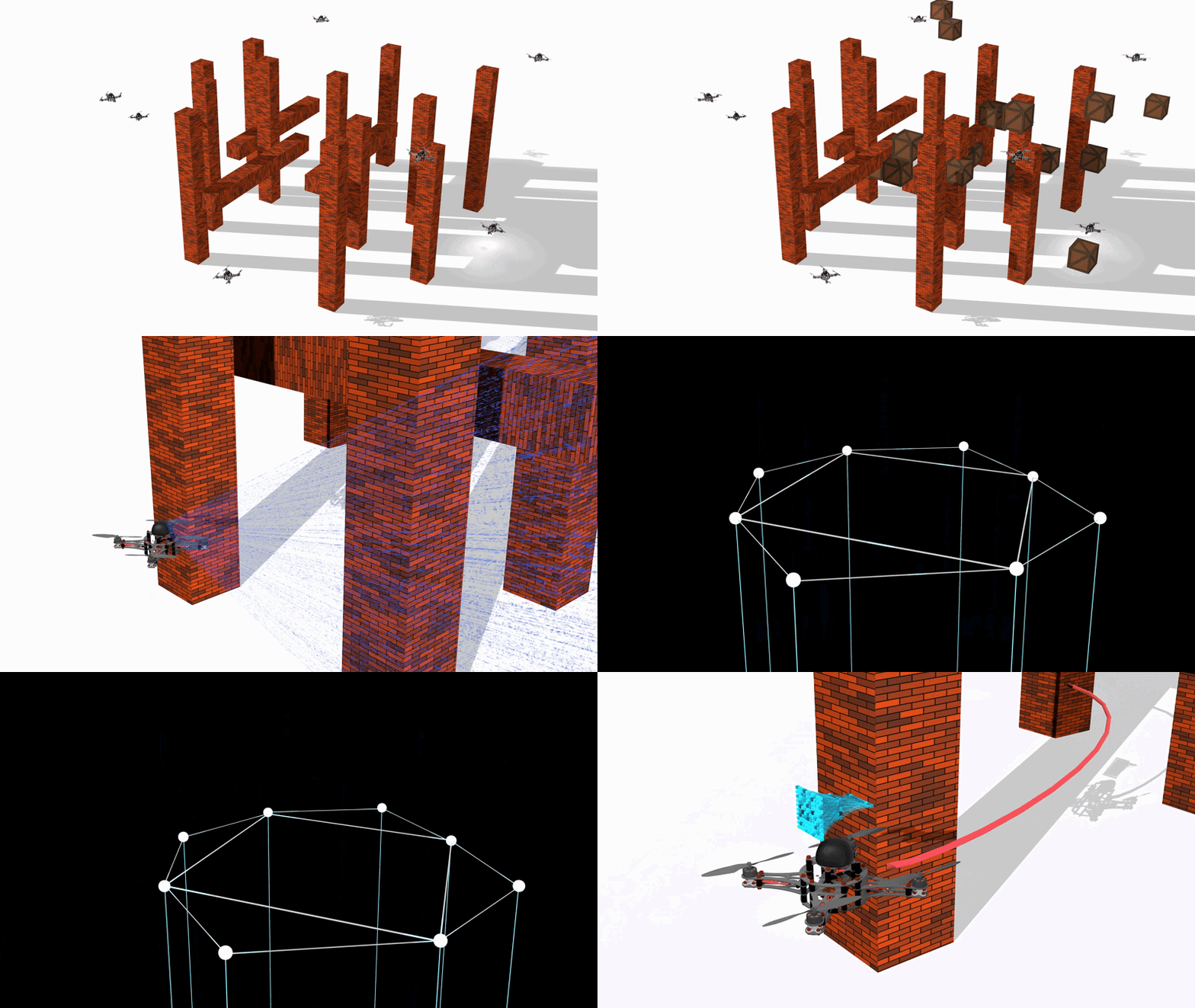
End-to-End Distributed Control & Estimation
Challenge
Traditional robotic architectures rely on rigid decomposition that introduces latency and compounding errors across multi-agent interactions.
Approach
- Decentralized Multi-UAV Control: A dual-branch neural architecture for swarms that processes raw point clouds and learns neural collision constraints.
- Hybrid Micro-Robot Tracking: A temporal graph system fusing visual data with historical control inputs for sub-millimeter accuracy under occlusion.
- Graph-Enhanced Electrical Impedance Localization: Reinterpreting sensor electrodes as graph nodes to predict object locations directly from voltage measurements.
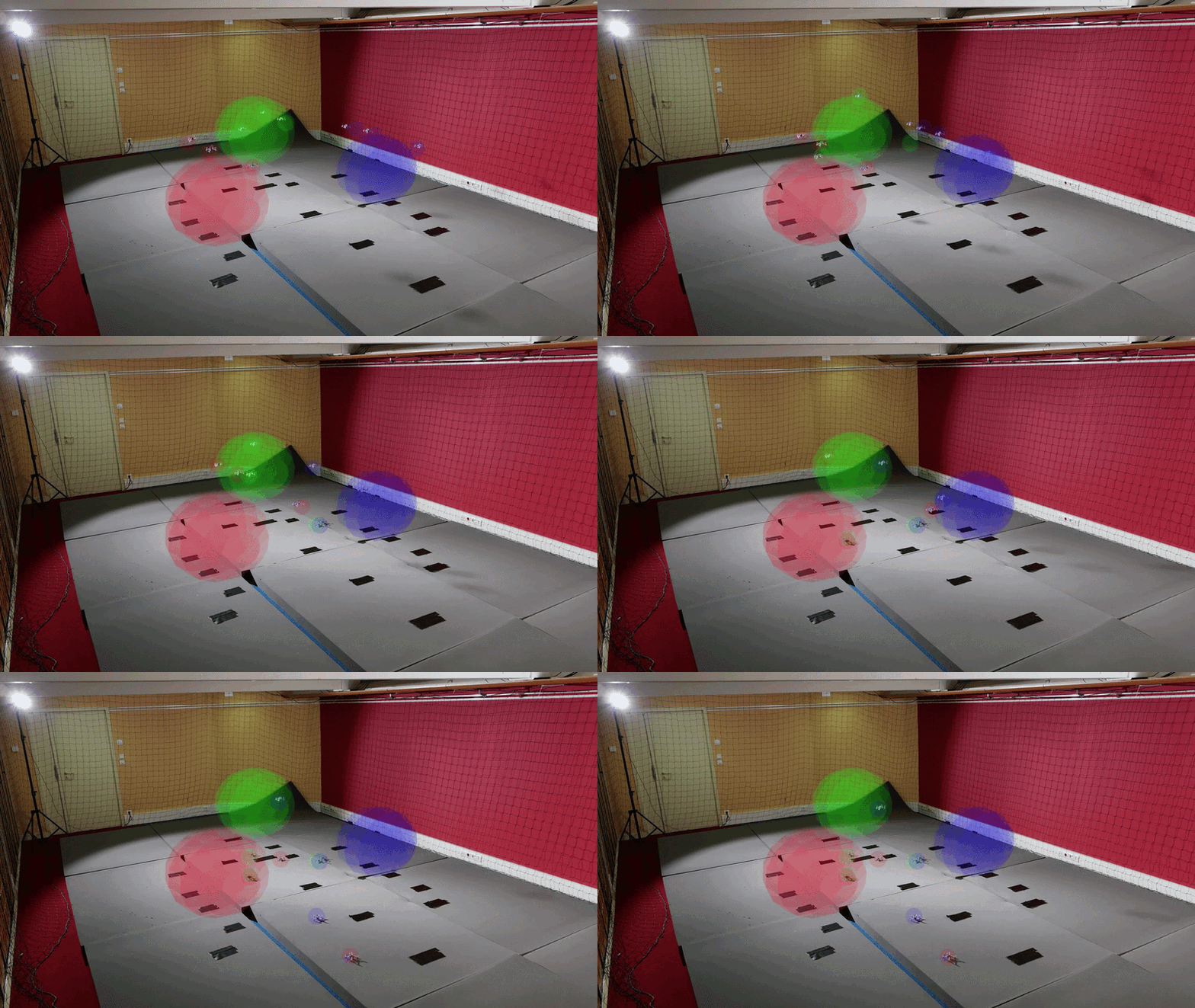
Dynamic Cluster Opinion Dynamics
Challenge
Multi-robot systems struggle with dynamic decision-making and fluid role allocation under uncertainty, particularly during spatial reorganization and resource depletion.
Approach
- Dynamic Heterogeneous Resource Assignment: Leverages structural similarities in return functions to dynamically cluster control policies.
- Team-Based Multi-Objective Optimization: Agents form strategic coalitions with clustered scalarization functions to align heterogeneous priorities.
- Topology-Agnostic Consensus: Validated on physical quadrotor swarms, ensuring stable clustering regardless of communication graph complexity.